Standard earpiece or custom earmold?
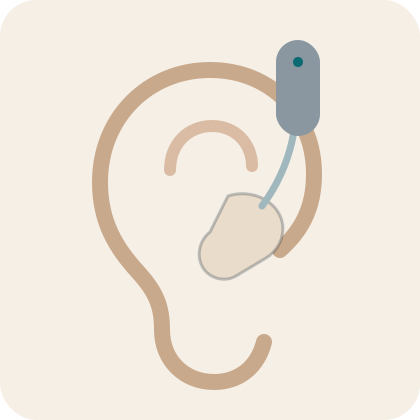
The part of a hearing aid that sits in your ear matters more than most people expect. Many behind-the-ear hearing aids use a standard silicone dome or tip that comes in a range of sizes. Others use a custom earmold (in British English, earmould): a piece made from a measurement of your own ear, which holds the speaker or tube in place.
Neither is better in general. A dome is quick to replace and suits many people. A custom earmold follows the shape of your ear and is sometimes considered when a standard part does not stay put. Which one is right depends on your hearing aid, your ear and your hearing, so it is decided case by case. Our guide to domes, wax filters and small parts explains the standard parts.
Who may want to ask about an earmold
- Hearing-aid users whose earpiece does not sit firmly and keeps moving.
- People who find the current earpiece uncomfortable after a few hours.
- People who find it hard to put the earpiece in or take it out.
- People who already used a custom earmold, for example before moving to Israel, and need a new one.
What we check before starting
The hearing aid. In the first conversation we ask which hearing aid you use, including the make, model and style, and what to have ready for the visit.
What bothers you today. Movement of the earpiece, difficulty inserting or removing it, or discomfort. Each detail helps us understand what to check.
Whether an earmold is the right direction. Sometimes it is and sometimes it is not; a different dome size or type, or a check of how the earpiece is inserted, may be enough. The answer is decided case by case, and suitability is not promised in advance.
How it works
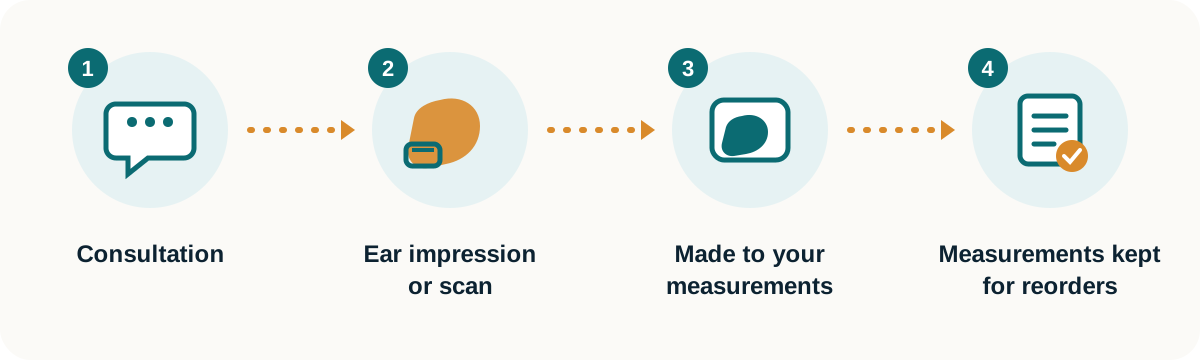
- A conversation about your hearing aid and what you need.
- We come to you by appointment, anywhere in Israel.
- The measurement is taken with an ear impression or a scanning process, as suits the ear.
- The earmold is made to the measurement.
- It is sent to you.
The production time is given after the measurement is taken. When the measurements were kept, a replacement may not need a new measurement; suitability is checked each time.
What an earmold does not do
An earmold is about how the earpiece sits in your ear. It does not replace a check of the hearing aid itself. If the device is weak, silent, crackling or not charging, that is a separate question; start with hearing aid not working: checks by symptom. If you have ear pain, discharge or a sore spot that persists, see a doctor first.
Looking after an earmold
Wipe the earmold daily with a soft, dry cloth and check that the sound opening is not blocked with wax. Follow the care instructions you receive, and do not use alcohol or other cleaning fluids unless the instructions say so. The general routine is in hearing aid maintenance and how to clean hearing aids. Custom earmolds are one of four types of custom earplug G-Sound makes to measure; see the custom earplugs overview.
Updated 22 October 2026 · Written by the G-Sound editorial team. General information only; it does not replace a hearing assessment or medical advice.
Frequently asked questions
Will a custom earmold suit my hearing aid?
That is checked case by case, before the measurement, according to the hearing aid and what you need.
What should I prepare for the visit?
The hearing aid itself, its make and model, and a short description of what bothers you about the current earpiece.
Is a custom earmold better than a dome?
Not in general. A dome suits many people; an earmold is sometimes considered when a standard part does not sit well. It is decided for each case.
Does a new earmold fix a hearing aid that sounds weak?
No. An earmold is about the fit in the ear. A weak or silent hearing aid needs a separate check of the device.
How long does production take?
The production time is given after the measurement is taken.